


How to design a diversified portfolio that navigates bull markets, corrections, and uncertainty without panic or confusion.

The pitfall of choosing the top performing funds
With the advent of “do it yourself” investments, many investors feel that they can choose the right mutual funds for themselves rather than relying on advisors. They can simply download a mobile app (like Grow, Zerodha and others) and conveniently buy and sell mutual funds. Bypassing the advisor/distributor give them the advantage of lower expense load thus their return is likely to increase by 0.50-0.75% per annum. But is this benefit worthwhile for long term portfolio? We will examine this question in totality in coming articles, but in this article, we will see how most of these investors choose the mutual funds in the absence of expert advice- It is observed that most of these investors turn to best performing funds of the recent past especially of the last 1 year. These mobile apps and many other such sites publish the names of top performing funds of the past year or two. In isolation, these returns look very very attractive. Investors feel that they have done a great reserch and end up buying these funds. But is this the right choice? Let’s examine 2 undeniable factors- The top performing funds are mostly lucky- Nobel Laureate Daniel Kahneman writes after a great deal of research in his famous book Thinking Fast and Slow that “the successful funds in any given year are mostly lucky: they have a good roll of the dice. There is a general agreement among researchers that nearly all stock pickers, whether they know or not- and few of them do- are playing a game of chance”. Common investors expect that the top performing would either replicate its Steller performance or even if it won’t remain at the top, it will remain among the top few funds. But the problem is that, they are not rewarding the skill of the fund manager. Rather they are rewarding the luck which most of the time runs out next time. Even the skill in evaluating the business prospects of a firm is not sufficient for successful stock picking because future will always remain unpredictable. Regression to the mean- Like most other things in life, mutual funds also very strongly exhibit regression to the mean concept. As an investor you pick up the best performing fund of the last year only to see that this fund is delivering below average return in coming years. An average investor keeps on churning his/her portfolio in pursuit to find the best performing funds. But they are better off respecting the regression to the mean theory. A study of Fortune’s “Most Admired Companies” finds that over a twenty years period, the firms with the worst ratings went on to earn much higher stock returns than the most admired firms. The better approach is to make the portfolio based on your risk profile, investment objectives and time horizon. Basis these, set the right asset allocation and keep your portfolio sufficiently diversified. For most investors, doing these activities objectively may be cumbersome hence staying with the advisor/mutual fund distributor should be the preferred route despite some cost. Manoj Pandey CFP Mainstream Investments Services Pvt Ltd
Budget 2024
Full Budget 2024 presented today by finance minister Nirmala Sitharaman shows lot of promises as well as some disappointments. Let us discuss the promises first- Agriculture research will be upgraded to improve productivity and developing climate resilient varieties. 1 Crores farmers across the country will be initiated to adopt natural farming, supported by certification and branding in the next 2 years. Digital Public Infrastructure (DPI) for coverage of farmers and their lands in 3 years. Digital crop survey in 400 districts. One month’s wage to new entrants in job market in all formal sectors in 3 installments up to Rs 15,000. Government will reimburse EPFO contributions of employers up to Rs 3000 per month for 2 years for all new hires. Setting up women hostels and creches in collaboration with industry to promote higher participation of women workforce. Loans up to Rs 7.5 Lakhs with a guarantee from the Government promoted fund. Special schemes for various development projects for eastern states especially for Bihar and Andhra Pradesh. Pradhan Mantri Janjatiya Yojna for improving the socio-economic condition of the tribal community. Credit guarantee scheme for the MSME sector. Mudra loan increased from Rs 10 Lakhs to Rs 20 lakhs. Twelve Industrial parks will be developed. Rental housing with dormitory type accommodation for industrial workers will be developed under PPP model. Scheme for providing internship opportunities in 500 top companies to 1 Crores youth in 5 years with an allowance of Rs 5000 per month along with Rs 6000 one-time assistance. Encouraging states to lower stamp duty along with plan to lower the stamp duty on new property owned by women. Promote water supply, sewage treatment and solid waste management projects and services for 100 large cities. Rs 10 Lakhs Cores will be provided for PM Awas Yojna 2.0. Setting up Bharat Small Reactors and newer technologies for nuclear energy. Provision of Rs 11,11,111 Crores for Infrastructure (3.4% of GDP). Additionally, Rs 1.5 lakh Crores interest free loans to states to support resource allocation. Emphasis on tourism with special attention on Bihar and Odisha. Private sector driven research and innovation at commercial scale with a financial pool of Rs 1 lakh Crore. Venture capital fund of Rs 1000 Crores to promote Space Economy. Custom duty reduction on certain medicines, mobile phone, mobile PCBA, Charger, Gold& Silver. Fully exempt custom duty on 25 critical minerals. Now comes the disappointing part- Short Term Capital Gain is increased from 15% to 20%. Long Term Capital gain is increased from 10% to 12.5%. No tax slab change in the Old Tax Regime. Some additional tax benefit in the New Tax Regime to make it a preferred choice. There is clear message of the Government to move to New Tax Regime. Old Tax Regime encourages long term savings and investments. Its downgrading is disappointing for small investors. So, overall, a mix bag for the investors. While proposed investments in various sectors should spur growth momentum of the economy, but dampener for investors was increase in the capital gain tax especially Long-Term Capital Gain Tax. But with the continued focus on infrastructure coupled with fiscal prudence augurs well for the market after a short blip. But as the economic survey has highlighted the concern of unabated stock market price appreciation, it’s time to revisit your asset allocation and continue your own investment prudence. Manoj Pandey CFP Mainstream Investments Services Pvt Ltd

Are you planning to invest in the best performing funds of the year?
One of the most erroneous methods of selecting equity funds is by only watching the performance of the last one year or two years. Many investors feel that by taking out a few best performing funds from the internet or from some financial journal, they have found the champion funds. But this one sided research usually results in dismal performance. The lure of attractive numbers is so alluring that investors forget that it is just a past return and not yet the actual return for them. Not just investors but many mutual fund advisors and distributors find the easy way selling funds on the basis of past return. This is quite easy for them to show the return of the best performing funds and sell the funds. But this is not the best way of selecting funds. In fact research shows that mutual funds usually follow what is called the concept of “reversion to the mean”. This concept says that funds which have delivered superlative returns are not likely to repeat their past performance in fact, most are likely to underperform. So this concept makes the process of selecting the best funds of the year concept on its heels. This is because, by selecting the best performer of the year, you are most likely choosing the potential below average performers. So, what should be the approach of the investors to choose good funds for their portfolio formation? One may argue that we should then select the most laggard funds of the year because according to this theory they are likely to be the winners in the coming time? Not necessarily! See the fund management is a systematic process, smart anticipation and diligent discipline by the fund manager, his/her team and the entire fund house in unison. There has to be firm conviction on the part of all these components without being swayed by the market movement. Fund’s underperformance due to bad fund management will not help the investors who are hoping to benefit from “reversion to the mean” concept. Many fund managers, when they see that their style is not working, try to imitate others in order to turn things around. But that is not going to be successful in the long term. So the ideal approach should be to understand the quality of the fund manager, his/her team apart from the philosophy and the process of the fund house. Also, watch out for the consistency of the performance rather than focusing on the recent past returns. If all this looks complicated, then simply invest in index funds. In the ideal situation, you should select the better fund managers who along with a better team are working under better fund houses. Then, you can select the funds of these combinations which have underperformed in the recent past. They are quite likely to perform well in the coming period. By the same coin, if you have already invested in those funds which fit in the above combination but performed poorly in the recent past, don’t jump ship and move to hot funds. It may be a mistake because good funds generally bounce back with a bang and maintain the long term outperformance. In the overall analysis, investors are better off choosing the funds with the quality of management and consistency of performance rather than simply investing in funds on the basis of recent past returns. As I mentioned above, by choosing index funds, you can avoid all these complications. Manoj Pandey CFP
Diversification Works if You Appreciate Diversity
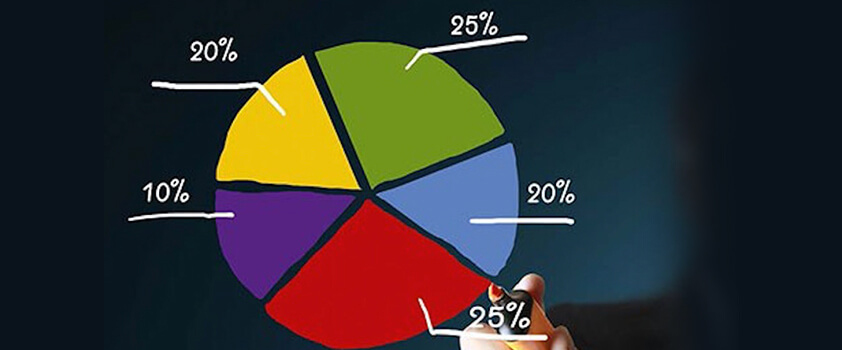
“Unity in diversity” is the dictum we use for our beautiful country “India”. We have appreciated our diversity and diversity has delivered us unity & progress. Similarly, a diversified portfolio is an all weather portfolio. It sustains your wealth in the short term and makes it grow in the long term. But, I have seen that many investors while seeing their portfolio start comparing one fund with another. They do comparison between apples and oranges and conclude that few funds are underperforming hence should be removed from the portfolio. Worse, they convinced themselves that money should instead be invested in funds that are at the top in performance charts. That is a self defeating approach for your long term success in wealth creation. The reason we diversify our portfolio is to appreciate the fact that not every kind of asset class will perform similarly together. You may have domestic funds doing well and international funds not performing well and vice versa. Similarly, equity might be performing superlatively doesn’t mean that you should discard your debt holdings. The meticulously built portfolio based on your financial goals and risk profile should be not altered just on the basis of recent performance. The worst possible decision is to crowd your portfolio with similar kinds of funds. They may go together but when they fall, all would fall simultaneously and then it might take a long time to return your portfolio back to normalcy. In the meantime, you would be sulking with huge mental agony. As an investor, we need to be mindful of three simple facts- – Past performance is no guarantee to future performance. – Every asset class has their own cycle of performance. Unfortunately, we can’t predict the timing hence it is prudent to invest in a diversified portfolio so that underperformance of one class is compensated by other asset class/classes. – By putting all your investments in similar kinds of funds, you are making your portfolio unidimensional. This may pose a big risk to your portfolio when it is going down substantially in comparison to other diversified portfolios. Therefore, it’s important to appreciate the beauty of diversification. For long term investment success, it is not necessary that all your funds should perform well simultaneously. In fact, every time you would find that some or the other funds are underperforming all the time and that should be appreciated not to fret upon. When you maintain your diversified portfolio for a long time, this portfolio delivers superior performance and helps you achieve your financial goals. All through, your journey of investments also remains peaceful by having a diversified portfolio. Manoj Pandey CFP

Regular Check Up Doesn’t Mean Regular Treatment
One of my clients recently complained to me as he said- “Manoj, you have not done any changes in my portfolio for a long time. My banker was telling me that you need to be active with your portfolio otherwise your portfolio wont grow. I said, I reviewed your portfolio with you twice last year and found there is absolutely nothing to change. Then I told him an analogy. You go to your doctor for a regular check up and your doctor says all reports are good and there is no problem with your health. Doctor then added that you need to continue practicing healthy habits like exercise, good diet, enough relaxation and a happy frame of mind. Would you be happy or sad in such a situation? Obviously you should be happy. Would you say, this doctor is useless as he has not prescribed any treatment? No, most probably you will be joyful that you don’t need any medication or surgery. This is so relieving, isn’t it ! Like doctor’s regular check ups, it’s important to review your portfolio regularly. For most of the portfolios, once a year review is good enough. For some bigger or complex portfolios, one may review them half yearly or at the max, quarterly. But more than quarterly review is generally useless unless there is some extraordinary situation like market collapse etc. Even in a market collapse situations, knee jerk reactions like selling your portfolio is a sure recipe of wealth destruction. Too much portfolio review and transactions will result in- 1) Waste of time. 2) Losing peace of mind. 3) Incurring unnecessary expenses like exit load and capital gain taxes. 4) End up getting bad investments because you may tend to invest in hot funds/stocks which may be primed for a downturn. Further, like doctor’s analogy, in most of the times you may not need to do any change in your portfolio. All you need to do is to continue the healthy practice of continuation of SIPs, maintaining your budget for rightful expenses as well as for savings and focusing on your job more so that your income grows and results in better savings. I call this approach of portfolio management, “alert passiveness”. While you remain alert and watch your portfolio regularly, you take action only when it warrants. You review your portfolio on a regular interval and take action on asset allocation and portfolio diversification. But avoids unnecessary transactions. Your banker may try to prove her worth by giving you advice for regular transactions. She may also lure you by pitching hot funds or new fund offer (NFO) and ask you to replace with your existing portfolio. But most likely, your meticulously built goal based portfolio is good to achieve your financial goals. You dont need treatment all the time. Only regular check ups are good enough. Manoj Pandey CFP

We Are Major Now
With your continued patronage, we have scaled a new height. Today, Mainstream Investments is turning 18. When in 2005, when I along with my wife Pamita launched this company, many of my well-wishers advised us not to take the plunge. We were just married and taking the uncertainties of a new business along with the mounting expense of running a newly married life was quite difficult they felt in their right earnest. But with some conviction, we went ahead with a Private Limited company right from the start. Pvt Ltd companies have to follow a lot of compliances along with substantial maintenance costs. I had the motorcycle then but the visitor card read “director of the company”. Thankfully we had the blessings of our initial clients who could see the conviction of our idea and willingness to serve honestly. Hopefully we have maintained their trust with our dedication and integrity. During this long period, Mainstream had seen many different phases of the market. We had seen the heady period of 2005 to early 2008 when the market jumped from 6000 to 21000 and then we saw the huge collapse when the market plummeted to less than 8000. 2008 was really a scary time when we struggled to keep our business floating. The other big challenge came during the early days of Covid when again the market collapsed by 39% followed by massive lockdown and fear psychosis. But, we were determined to remain in this business with a “come what may” attitude mainly because of the trust of our clients. Also, we knew the funny nature of the stock market which compensated for the losses very soon. In 2009 the market rebounded by almost 100% and we are back in the race. Now with the completion of 18 years, we can look back and recall some of the satisfying accomplishments in our journey- – We have pioneered the concept of systematic transfer plan (STP) for our clients when even the mutual funds were not trained to carry out these transactions. – We have been providing a goal oriented financial planning process called AWAKEN which transforms the power of investments in a very big way. – Our service motto is to complete the client service on that day itself. – During the big meltdowns of the stock market, we proactively advised our clients to rebalance their portfolio. We believe that every market downturn can be used as an opportunity if we have a good system in place. – During the downturn of the market, we always remained in touch with our clients. In fact during such a period, our responsibility becomes even bigger to continuously engage with the clients. – We believe that investment is the way of life. We motivate our clients to remain lifelong investors. – We have observed that the biggest challenge for the clients is to stay invested for a long time. Only by staying invested for the long term, you can reap the power of compounding. Our system is designed to help our clients become test match players instead of T-20 dashers. Some of the interesting moments during our journey- 1) One of my client’s daughter had just started her career. He made her start one small SIP when I happened to meet him in 2005. Since then her fascination with SIP continued .Today her portfolio is worth Rs 4 Crores. 2) One of the clients started a very small SIP of Rs 1,000. Over the years, he continued his modest SIP and later his wife also started saving though small SIP. He bought two flats in Noida mainly from the portfolio he built over the years. 3) After filling the application forms for investment, one new client went to a temple and did a Sai pooja. Those investments worked real wonders and today after 17 years, they have multiplied by10 times. Prayers and faith in God does work wonders! 4) We have some clients who have been maintaining their regular monthly from the portfolio itself. Over the period, their portfolio grew substantially despite taking regular monthly income. One such client not only takes regular income but his portfolio also grew by nearly 2.5 times in the last 18 years. 5) One of my clients Invested 10 Crores through us and through some of the banks. In 2008,when the market crashed, he exited despite my strong advice not to do so. He incurred 50% losses. Subsequently, I knew that he again started investment and built a decent portfolio through some other advisor. But during covid he again pressed the panic button and sold his investments at 40% loss. Some clients must be told very clearly not to come close to the stock market. 6) One of our clients kept his investment in liquid funds for more than 14 years. He never got convinced that this is a good market to invest in equity funds. Too much market analysis is a sure shot recipe for paralysis. 7) With more than 23 years in this field overall, I am currently serving the third generation of a few families. There are many more interesting titbits of our journey which we shall continue to share in future as well. Of Course the coming time will be equally interesting so there will be a lot to add in terms of interesting anecdotes. Let me state a few numbers- Portfolio we are managing- Approx. 200 Crores. Total clients we serve- 672 Number of clients who are running their SIPs- 180 Number of clients who have built more than 1 Crore portfolio only through SIPs- 40 Number of clients who are taking comprehensive financial Planning AWAKEN- 50 But this is only the start. With your continued trust and love, we will continue to scale new heights together and achieve the coveted balance of health, wealth and wisdom. Thank you once again from the bottom of my heart for giving us the opportunity to serve you. Manoj Pandey CFP
Game of Investment Requires You to Play on the Front Foot Sometimes
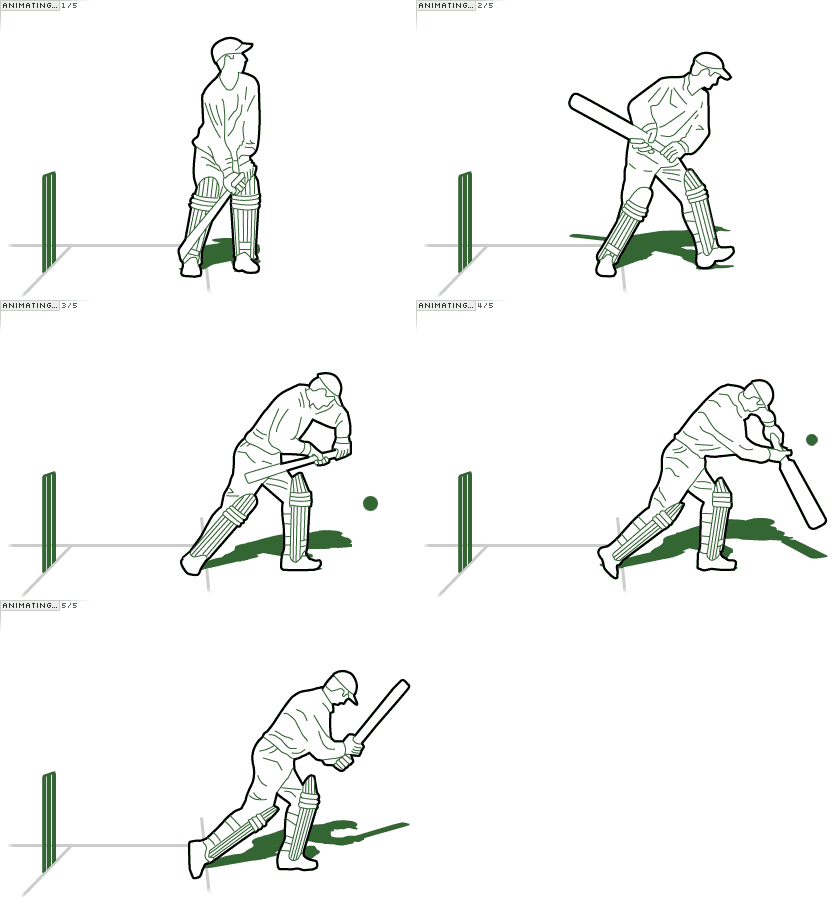
Few days back one investor came to me through a reference. He had been taking advisory services from one of the renowned advisors in Delhi but not satisfied with the result. On such occasions, usually I don’t change the portfolio too much even after the change of advisory because there usually is not much to change. But in this case, I really felt for the client. There were few NFOs (New fund offer) and fancy thematic funds. One more glaring thing that I noticed is that during covid, the advisor shifted substantial amount from equity to debt and started systematic transfer plans (STPs) back to equity funds. So, the client exited from equities virtually at the bottom and then entered in equities again periodically through STP in the next 3 years. This exercise resulted in exiting from the equity funds almost at the bottom and taking entry again at the rising market. There was a different strategy we followed during the same time. We saw that in March-April 2020, the asset allocation of a typical client was down by almost 5-10% compared to his/her February 2020 asset allocation. We, like everyone else in the world, had no clue what would happen in the coming days. Situation was scary on the health front as well as on the financial arena. Experts were predicting further huge downside for the equity market. At that time, we had decided to stick with our discipline of time tested asset allocation formula. So we have written to all our clients to rebalance their asset allocation and get it back to February 2020 level. Since Equity allocation had gone down, we advised them to switch from debt to equity funds in March and April 2020. In these 3 years, equity market has almost doubled and resulted in superlative return for the investors. More so for those who entered at almost the bottom of the market due to asset allocation rebalancing exercise. Now look at the performance difference of the strategy of that advisor, vis a vis the asset allocation rebalancing approach we followed- 1) Total return on equity funds on advisor’s portfolio generated paltry 20% in the last 3 years. 2) The asset allocation rebalancing strategy we followed generated a total return of 80%-90% in the last 3 years for equity segment. In the investment world, it pays sometimes to play on the front foot rather than being timid. Covid like situations are opportunities disguised as crises in the investment world. You have to capitalise such situations. No, I am not saying to throw caution out of the window. All I am saying is to remain true to the strategy of asset allocation. We have not switched the entire amount from debt to equity even though in hindsight it would have been fabulous to do so. All we did was to remain committed to the time tested success of the asset allocation model. This has given us enough conviction to advise our clients to rebalance their portfolios. Taking calculated risk pays a rich dividend in every walk of life including in investments. Important thing is to have a solid model which acts like an anchor during your risk taking venture. In the investment field, asset allocation is one such anchor. You just can’t hope to excel by being weak-kneed and following the herd mentality. You have to take some calculated risk as well. Manoj Pandey CFP

Become a lifelong Investor
Warren Buffet is 92 Years old but he is still very passionate about investments. He spends nearly 80% of his time reading. He studies companies’ profiles, financial statements, market reports etc. He also studies fiction and poems in order to properly understand the full perspective of life. What is the necessity for one of the richest persons in the world to work so hard? Maybe because he values being a lifelong investor. He invests in education, he invests in charities and of course he invests in financial markets. Because of being an investor for nearly 81 years (yes he started investing at the age of 11), he got what is most important in any investment. It’s the “time” that resulted in huge power of compounding! Today, he has not only amassed a huge wealth for himself but far more important are his contributions to the world such as- 1) Investment lessons that are pure gold for any long term investor. 2) The power of participation in strong businesses. 3) Having courage to become contrarian and still beat the market big time. 4) Enjoy big money without diluting the core values such as transparency, honesty and simplicity. Investment should be a lifetime passion. Be it investment in health, education or in money. Investment in health is beautiful because you enjoy the fruits of wisdom as you continue to age. Investment in education is amazing because you keep on exploring the magical outer and inner world. Investment in money is miraculous because you attain a magical state called Financial freedom. Also, contrary to the prevailing misconception that long term investment is a sacrifice of present life, investment is actually an enjoyable feeling. investing and seeing your hard earned money grow is one of the most satisfying feelings. Many investors register their SIPs but don’t increase it periodically. Others start SIPs but only after a few years, they stop it. Until and unless it’s impossible to run, one should try to continue SIPs even if the SIP amount is bare minimum. Every penny invested today will become big later and create a huge fortune for you. That’s how the power of compounding runs its magic workshop. But you are investing not just for building a future fortune. Warren Buffet still invests not because he has to reap the long term compounding as he doesn’t have too many years left. He invests because he loves the game of investing. He knows he can continue to enjoy playing this game till he is alive and leave his wealth and investment wisdom for the benefit of the humanity in his physical absence. Manoj Pandey CFP

Running SIPs could be the motivating force for you to regain your job
The other day I met a family who are our clients. The mood was a little sombre because the person had lost his job only a couple of days back. Fortunately the company promised to give him a salary for the next three months and hopefully within that time frame, he will get the suitable job again. But since he was in a quite senior position, getting a compatible job is not that easy either. Sometimes it takes more than three months to get the appropriate post. So the discussion turned into whether the running SIPs should be continued or stopped. They asked my opinion and this is what I told them- I said that SIPs should be continued simply because- 1) You have three months and this is a reasonable time frame to get a new job. 2) SIPs can be stopped or paused with a 7-10 days’ notice. So if you still need more time, then we can stop the SIPs towards the closer to 3 months. 3) Running SIPs could be the added motivation and positive pressure to search for a good job within the time span. SIP pressure is not only good for your financial goals, it would propel you not to set in any lethargy. And they agreed to continue their SIPs. Many investors, in case of any short term financial stress, take the easier route of stopping their SIPs. Whether in case of job loss, purchase of home, requirement of funds for children’s education etc, the easier thing for many people is to stop their SIPs. Also, once the momentum of SIPs goes it doesn’t come back easily. So, even after getting the financial order back to normal, most people don’t restart their SIPs. Therefore, my suggestion is to always continue your SIPs. Yes, there may be a temporary situation of little financial stress but even in such conditions, my humble advice is not to stop all the SIPs. Continue SIP for some amount at least because the habit of disciplined investment is vital for long term financial goals. By continuing your SIPs, you are not only addressing your long term financial goals but also giving yourself a vital message that I am robust enough to continue my quest towards financial freedom. Yes, SIPs are forever, try never to stop them. They are taking you towards a beautiful world of financial freedom. Manoj Pandey CFP
