
Being in the investment advisory line for more than 20 years, I am still amazed at the way the mutual funds are selected. There is an underlying belief among people as well as in the financial media that successful investment is all about selection of right mutual funds. Further, the factors that people generally focus on to select good funds makes the portfolio destined for underperformance. So, here is few important pointers which will help you construct a solid portfolio without bothering to choose the so called best mutual funds- 1) Focus on Your Financial Plan- First and foremost, prepare your financial plan. Articulate your financial goals, Optimise your savings, and understand your risk profile. Your financial plan will be a unique expression of your priorities, values and desires. Because of these factors, your financial plan and portfolio may be quite different from your friends. 2) Focus on Asset Allocation- Your financial plan depending upon your priorities, values, desires and risk profile will suggest a certain asset allocation to achieve your financial goals. Asset allocation ( distribution of assets between equity, debt and gold) is 90% responsible for your investment success. Yes, it’s not the selection of funds rather the right selection of asset allocation which mainly contributes to your portfolio performance. So, should you focus more on asset allocation or fund selection? 3) Selection of mutual funds- Once you make your financial plan and set the asset allocation, now comes the turn of selection of mutual funds. The problem is that, people don’t do the first two steps properly and straight away jump into this step. That would be a big mistake which could set the portfolio for perennial underperformance. So, after carefully completing the first two steps, let’s see how the right funds should be selected- Focus on proper diversification of your portfolio- Choose the funds in such a way that you cover the entire spectrum of the market. So, on the equity side, you may choose funds with large cap, mid cap, small cap, multi cap, hybrid and even international focus. Similarly, on the debt side, choose funds with long duration, medium duration, short duration and ultra-short duration oriented funds. Idea is to make the portfolio truly diversified. Focus on fund managers with good track records and fund houses with established processes- Take some time to check the resume of the fund managers. What are his/her qualifications and track records? Also, you may like to avoid fund managers who jump from one fund house to another quite frequently. Similarly, choose the fund houses which follow clearly demonstrable values and not get swayed by the momentum of the market. Focus on valuation of the funds- One of the important barometers is to see the PE ratio ( Price to earnings or PE ratio shows the relative valuation) of the funds. Funds with very high PE ratios tend to perform poorly in the distressed market condition and may take much longer to recuperate the losses. Focus on consistency of the fund rather than on the recent past performance- Most of the people are obsessed with choosing the funds which are superlative performers of the last year. Media perpetuate this frenzy. But here is the secret- mutual funds follow what is called “reversion to the mean concept”. This implies that funds which have performed above average tend to perform below average in the coming time frame. Thus, it’s important to see how consistently the fund performed over a long period of time and not just in the past one year. If at all, one should stay away from hot funds of the year. Avoid New Fund Offers (NFOs)- One more misconception which refuses to go away among people is to consider NFOs as a good investment opportunities because they start with the NAV of Rs 10. See, starting NAV is just a base price without showing the underlying valuation of the fund. So, for that matter, NAV has no role to play in the fund’s performance. In addition, NFOs tend to spend quite a lot on marketing which eventually goes from investors’ pockets. Besides, they have no track record to show their fund management process and performance. Focus on expense ratio- All things equal, prefer funds which have lower expense ratio. After all, the expense of managing funds comes from your kitty only. Index Funds- If all this seems too complex and tedious, simply invest in index funds. These are low expense funds which simply mirror the wider market indices. Thus, they are also called the passive funds. In the US, most of the actively managed funds don’t beat the index funds and this trend is beginning to emerge in India also. Manoj Pandey CFP

One More Bank in the US Fell down
Shut down of Silicon Valley Bank (SVB in short) in America sent a shockwave across the world and brought back memories of the collapse of Lehman Brothers in 2008. Let us see the reason of its collapse and what the implications are for the economies and the investors like you and me. Why this bank caved in- SVB was a specialised bank giving the banking services to start-up companies mainly in tech sector. It was a niche player which specialised in understanding the needs of the start-ups who didn’t have lot of collaterals for taking loans from conventional banks and institutions. Also just like any other banks, SVB was taking deposits also and most of these deposits come from the same companies to whom it had given loans. All the operations were going on quite smoothly till 2020. In fact the period between 2012-2019 was the golden period for the bank because of the start-up boom in the USA. Trouble begins when at the outbreak of Covid, US federal reserve in order to float the economy decided to cut the interest rates aggressively. It was thought all around the world that the heavy impact of covid and lockdowns can be controlled only by massive (and somewhat artificial) interest rate cuts. Due to such monumental cuts, cheap money flooded the financial system. What SVB did was to park this excess liquidity in the US treasury bills. By 2022 onwards, there has been a lull in the start-up ecosystem. Companies have been facing downturn in business, and the start-up party music halted abruptly. But more than that, due to inflation spiralling to a record level in 40 years, US fed has started increasing the interest immensely. Rates jumped up from less than 2% to 5% in a very short span of time. Due to this, the value of old US bonds crashed remarkably and there was a huge mark to market loss to the bank. Around this time, couple of things also happened. One, start-ups were facing funding winter along with challenge to float their fledging business, they needed to break their deposits from the SVB. Secondly many savvy venture capital funds started advising their funded companies to withdraw cash from the bank. All this resulted in massive sell off of US bonds by the bank at a heavy discount. But the pressure of deposits withdrawal was so high that SVB could not withstand and collapsed on Friday the 10th March. Is this a repeat of 2008- This collapse is getting equated with 2008 collapse of Lehman Brothers. But in my opinion the impact of SVB is limited to Start-up companies and not the wider economic landscape. Some companies would definitely face the brunt especially if US Govt won’t bail out their deposits. Some may even shut down. So, its lot to do with US authorities as how will they handle this situation. They have given some indications that deposit amount ( even beyond the insured deposit amount of $ 2,50,000 per person) may be bailed out. Also, besides focusing on the affected parties of this fiasco, they may also be looking into the health of other banks because the massive rate hike might pose a big challenge to these bigger banks as well. In there any impact on Indian Banking system- Indian banking system is quite robust with number of safety net and check and balance by the RBI. Also, these banks are not as aggressive as the US banks which is good for our system. Moreover RBI is continuously ensuring that banks are properly funded and adhering proper capital adequacy norms. Lessons for the investors- There are very important lessons for the common investors. SVB in their greed to earn higher return have deployed bulk of its deposits in long terms papers and taken a huge amount of interest risk. It should have parked the amount in the securities of different time horizons. In other words it must have weighed in the worst possible risk factors and should have prepared for that. Alas, the greed had blinded its managers’ senses or so it seems. As the investors, it’s important to remind ourselves the time tested principles of proper asset allocation, diversification and define your fears and not just your goals. You may have to forgo some short term gain in the bargain but these hard choices will eventually make your life easier in the long run. PS- Franklin Templeton Mutual Fund had faced a similar situation in April 2020. They had the choice to let their troubled 6 funds carry on and let the investor incur a huge loss. But they made the hard choice of shutting down these funds. They faced heavy backlash and criticism but they stuck to their decision. Finally it paid off and investors got their money back along with reasonably good return. What could have been a staggering blow to Indian investment space was averted by the hard choice made by Franklin Templeton. Kudos to them. Manoj Pandey CFP

Life’s wisdom consists in the eliminating of non-essentials
When we go to a supermarket and move around, almost everything looks essential for our needs. But when we order something or buy from a grocery shop, we tend to buy only what we need at that moment, in other words, what is essential. Second scenario- when we surf on YouTube, most of the videos look interesting. Thus we tend to devote far too much time watching those videos which despite taking too much time leave us unfulfilled. I have now figured out a few things- Income and available time is always limited but there are so many spillage outlets. In such situations, I keep asking- a) is this expenditure of time and money as per my values and priorities? & b) Is this going to provide me fulfilment and satisfaction? For example if I have to choose whether to go to a mall or a monument, I will deliberate- – Which choice is as per my values of living a simple yet meaningful life? – Which choice gives me more fulfilment and satisfaction? Chances are that I may choose to go to a monument instead of a mall. But if in my family’s criteria, going to the mall precedes then I may change the option. This is because their fulfilment and satisfaction will become my value and fulfilment. The key thing here is “awareness” instead of blindly taking decisions and feeling dejected. Dreams also play an important role in shaping decisions on expenditure of time and money. Our family dream to go for a world tour in 2025 is one of my guiding lights for my ongoing financial decisions. Could we sacrifice a bit in terms of instant gratification and aim for something which provides me and my family a lasting fulfilment and satisfaction? If the answer is yes, then missing this instant gratification may not be that difficult. Rather, this sacrifice will be satisfying and fulfilling. Afterall, you have managed to live as per your values and priorities and this feeling will be as satisfying and fulfilling as attaining your eventual dream. Manoj Pandey CFP

Saying No is more important than saying yes
We had a client, let’s call him Mr Malhotra. So, Mr Malhotra had been constantly looking for new investment avenues or maybe they were chasing Mr Malhotra. He felt that he must always be on his toes, otherwise good opportunities would run away. He kept an eye on new real estate projects, NFOs, IPOs, ULIP Plans, PMS, equity debentures…..He didn’t want to miss out on any. He had invested in a few startups as well. His logic was to diversify his portfolio as much as possible. Also, he wanted to increase his possibilities of finding winners by investing in so many avenues. Sadly, his portfolio was too scattered and was all over the place. He had invented a big mess around himself. His quest to find new avenues made him a favourite client for the banks and real estate agents who kept approaching him with their new offerings, telling beautiful stories of projected returns and getting him to sign on dotted lines. Alas! his cupboard as well as his mind was full of investment papers which kept him busy on most of his weekends. Many of his policies lapsed, real estate projects failed, NFOs underperformed and his peace of mind shattered. It’s more important to say no to the onslaught of financial products than to say yes. The marketing and sales have been getting so aggressive that you really need immense awareness to say no. Most of the time, your bank offers you something, shows the imaginary return of that product and gets you to invest in that. Many even play with investors’ ego and claim that this is the exclusive offer for high end customers like you and available for only a limited period. Many clients simply feel that if the extra money is there in the account, let this be invested. Moreover, if the bank is offering something, it ought to be good. What they don’t realise is that you may not only be committing your money in some unsuitable investments, the maze of investments and their details will constantly frustrate you and you will always wonder what to do with those investments. Therefore, it is always worth doing your little homework before making any investments. Understanding a few basics of investments will save you from poor investments, mental agony, and paper mess which would continuously exasperate you. One of the best ways of saving yourself against this onslaught of financial product is having your personalised financial plan. This will make your investments disciplined and link them with your defined financial goals. If you maintain this discipline, then, it will be difficult for the bank personnel to penetrate your solid defence and will not be easy for them to bluff you. You will continue to get the pitch after pitch and they will continue to claim to give you sky, but maintaining the basic discipline will be your best protection against getting your money robbed and your peace of mind being ruined. Someone rightly said, discipline equals freedom. Manoj Pandey CFP

Financial Planning is Not Just About Long Term Goals
An archetypal financial planning starts with long term financial goals like retirement planning. Then there are other financial goals like children’s college education planning, marriage planning, buying a dream home etc. So the focus is on setting long term financial goals and emphasis on investments for the long term time horizon. Setting the stage for long term investments also gives the advisor a ready excuse for short term volatility as he/she can always defend- oh I told you the market could be volatile in the short term. But, should we just be preoccupied with only long term goals? What about living and enjoying our lives here and now? How long should we keep sacrificing our present life for those presumed important long term goals? Can there be a balance between addressing our long term goals yet living our present dreams? The answer is unequivocal yes! If we remain alert, we could find a great many ways to fulfil our passions without waiting for getting retired. It requires busting some myths, getting psychologically ready and being ready to utilise the opportunities, present day technology and mobility present. Most of us want to move around the world. But there is a huge psychological barrier in terms of our perception of squandering our time and money for fleeting memories. We calculate that there are many pressing financial needs which must take precedence over the luxury of traveling. This stems from the perception that traveling requires a huge amount of money and this may compromise our long term goals. Then there is apprehension of managing our time away from our job/business. Also, there is a lurking doubt whether my investments in that trip will be value for money or not. What if it turns out to be a bad trip? Some people also fret venturing into unknown territory and would rather prefer to remain in their familiar territory i.e. home. So, the first thing is to get over this psychological barrier. Travelling to the unknown is not only fabulously enjoyable, it is greatly spiritual as well, If you are open minded and love to know about different people, about their lives & cultures apart from enjoying the sight-seeing and adventures, then the visit would become an outstanding experience to cherish lifelong. Traveling would not only flourish you with rejuvenation but teach you immensely as well. Also the skills you will learn in your tours will keep you in good stead in terms of your new learnings and fitness. Who knows these experiences will also help you in developing something unique which the market out there is waiting for ! With regards to financing your trips, on most occasions, it is not as expensive as most people think. Do some advance planning taking the entire family on board, cut down unnecessary expenses for bigger cause, channel the savings into right investments and make some arrangements in respect of keeping your work going on in your physical absence. You may first start your outings regularly within India. When you plan a visit and make the announcement your family, the excitement of the journey starts from that day itself. You start knowing about the place, people, weather, site seeing places etc. You then bump into people who have already visited that place and they start sharing information or they may marvel at your decision to visit what they consider an unique destination. Also, when you plan your air tickets and hotel bookings well in advance, you can make some solid bargains. Further, why plan the trip in the peak season only? Off season trips will be great financially along with the fact that less crowd will boost your experience. You can also plan to live with the locals which would add to your enjoyment besides increasing awareness of that place. The other day, I was thinking about the purpose of financial planning and investments and I realised that most people don’t have much clarity or motivation as to why they are investing in the first place. Many start their investments half-heartedly and that shows in their overall savings as well. But when the purpose is not to become crorepati but to live our lives to the fullest, the real enthusiasm for investment begins. And then the real potential of savings and investments unleashed. I am not for a second, advocating to abandon your retirement planning or compromise with your children’s higher education. All I am saying is not to forget living your life here and now instead of focusing only on the future. Because when the future comes, it comes as “now” only. But by then, you would not only have lost the precious part of your life but also your motivation to challenge yourselves to go out of your comfort zone. Start living your life here and now. Manoj Pandey CFP

My morning rituals-
1) Make my bed immediately after getting up. 2) Do meditation for at least 5 minutes. 3) Write 3-5 most important things to accomplish for the day. 4) Do exercise or Yoga or play some games. Mostly it’s yoga but some days during the week I play badminton or do the walking. 5) Take a bath with cold water. Plan to continue it during peak winter also. 6) Read a few pages of some inspiring book. I prefer it over a newspaper. 7) Write 3-4 names whom I would like to call or write. Things, I avoid- 1) Watching Godi Media. 2) Watching Movies. 3) Social media. I try to avoid spending more than 30 minutes on social media. 4) Negative thinking. I try to catch myself thinking negatively and replace it with present moment awareness. Manoj Pandey CFP

Excerpt from my favourite book.
A beggar had been sitting on the railway platform for ages. Some passers-by put some coins in his begging bowl while many others simply passed by. Some days when he would get good alms, he would consider himself very lucky but even that happiness does not last long. The fear of next day would continue to agonize him. On many days he had to sleep on empty stomach. This had been going on for years. One day a stranger passed by. Out of his routine habit, the beggar put the begging bowl forward before him. Stranger told him, “I don’t have anything to give you, but what is that you are sitting on? Oh, It’s just an old rusted box, I have been sitting on it since I could remember, replied the beggar. Have you ever opened it? Asked the stranger. What is the need, it is an useless box. Opening it will be a waste of time. Replied the beggar. Stranger again insisted- “open the box”. Very reluctantly, the beggar opened the box and was astonished to see what was inside! The box was full of pure gold and precious diamonds! That’s the state of human beings. We look externally for some small gratifications such as accumulation of money & power, pleasure, name & fame etc. Also we tend to cling to thoughts & beliefs which provide us pseudo sense of security. These may contribute us some temporary relief but not for long. There remains always a sense of unfulfillment, dissatisfaction and fear inside us. Nothing seems to make us content. This is because the real wealth actually is inside us and when we get that, there is absolutely no need for outside bits and pieces to make us complete. We then tap the abundance of energy, creativity and ability to handle any external challenges. Ultimately a perennial peace always remains with us. Surprisingly, when we discover this internal wealth, outside affluence too embraces our lives in plenty. This is a big paradox- when we look for external things, they elude us but when we focus on inner abundance, outside wealth too comes in hordes. But what is stopping us to discover that inner abundance? “Our mind”. we are not our mind and till we identify ourselves with our mind and thoughts, we cannot discover this awakening. I have taken the above excerpt from legendary book by Eckhart Tolle “The Power of Now”. A truly life changing book that has definitely changed a few things in my life. Manoj Pandey CFP

Happy international Women’s day!
Dear Ladies of the world, You have covered some distance but still there is huge gap to be filled for creating an equal society. One area where the inequality is particularly glaring is in the field of money matters. Dear ladies, why are you still not making major financial decisions including investment decisions? Men have created the impression that finance is better left to them and you cannot understand the nuances of risk and return. This is surely a myth which must be busted. From my experience in the field of investments, I can confidently conclude that you are a notch ahead than men when it comes to building a great investment portfolio. I have reiterated many times that external things like state of the stock market, prevailing economic situations, interest rate movement etc matter less in investor’s portfolio building. What matters more is investors’ risk tolerance, financial goals, and ability to save optimally despite all the pressing financial needs. Here the understanding of you play a more robust role. You are more emotionally inclined with family’s financial goals and better motivated to save for these goals. So you have the inherent qualities to become successful investors. Including you, in the financial decisions create a magical impact for the entire family. I can vouch the success of many families in the area of portfolio wealth creation, where ladies are active participants. These ladies have proved themselves as better money manager because they can maintain the fine balance between income, expense and savings. In this backdrop, It is surprising that even most of the career oriented ladies who are doing very well in their jobs and businesses, don’t take their investment decision themselves. They still take the endorsement of their father, husband or other dominant male members of their family. Taking advise is certainly a great thing but following the diktat is not something which you will definitely be proud of. In the families where you are playing the role of a home maker, you seldom participate in the investment and financial decisions! My experience says that, for the success in portfolio building, All the family members must come on board without which it is just not possible to develop an effective saving plan and execute it consistently. Dear ladies, you had run the movement to take the political rights, take the right to choose your career, take the right to choose your life partner and you have been forcing the Govts to formulate policies that promote equality. So, why don’t participate in your investment and financial decisions also? The real empowerment will not complete till you demand equal rights in financial matters. So, shed your hesitancy and take energetic participation in financial decisions. You can do equal or even better than the men, that is for sure. Manoj Pandey CFP
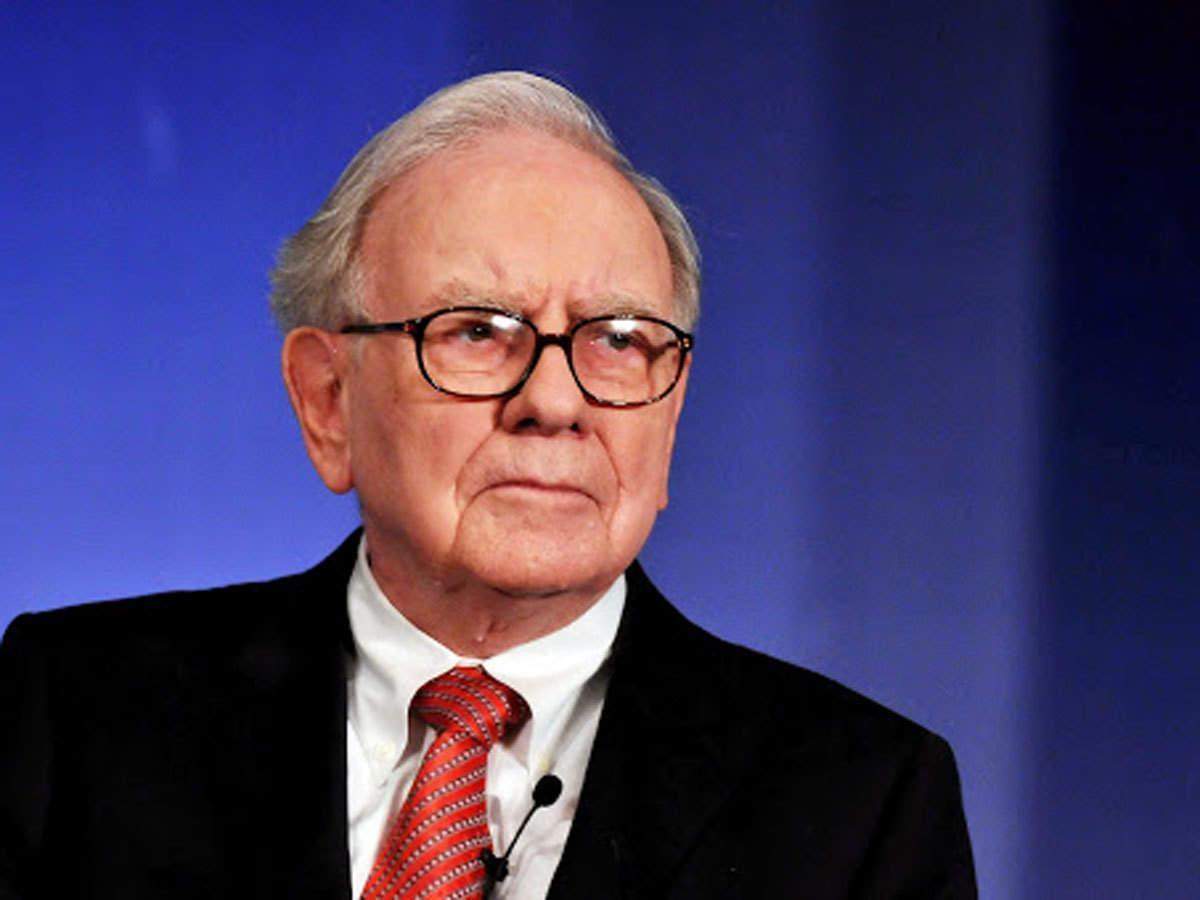
My most precious lesson from Warren Buffett
Like countless people who are in the field of investments, Warren Buffett is also my Guru. Not just because he is the greatest investor of all time but because of the deep insights he brings to the table. One of the gems he pronounces is this: ” If the Fed ( American equivalent of RBI) chairman comes and whispers in my ear what he is going to do with the rate of interest, my portfolio would not change even a bit”. That was the profound realisation for me early in my career because till then I believed that to become good in investments, you need to predict the market movements. Buffett clearly believed that market prediction is neither possible nor necessary. This surely is a big relief because you don’t need to break your head in forecasting the various unpredictable. Buffettology is quite simple- find good companies with strong moat which will last for a very long time and keep the competitors away, ensure that the company is properly leveraged and then wait for the right price to strike a deal. Keep checking the story and ensure that your original convictions remain intact. This way, you hardly need to worry about the external changing situations. Holding such companies with a robust moat for a very long time will help you reap the magic of compounding. Buffett further adds that if you can do this-great, but if you can’t, then simply buy a S&P 500 index fund and continue to hold it forever. If you look deeply, Buffett is advising to focus on things which you can understand rather than future gazing at the vast uncertainties around. Though I advise mostly in mutual fund segments, the teachings of Warren Buffett are still most relevant nevertheless. Now with the benefit of hindsight of 23 years in this career, I know the successful investors are those who focused more on factors which are within their understandable reach such as their financial goals, their risk profile and their time horizon. And then there is a second set of investors who keep their eyes and ears on market movements, interest rate moves, geo political affairs, political situations etc. While the first set of investors harvested the power of compounding, the second set lost the time, lost the energy and lost the power of compounding. Focusing on the internal and not the external world has a philosophical connotation and it’s extraordinary to see this in action in the realm of physical wealth as well. Manoj Pandey CFP

My Reading Journey
At the age of 18, I started reading books, mainly motivational books. I still remember my first book by Swett Martin, I was simply astounded by the audacity of the writer’s way of motivating the readers. Reading those words was electrifying. At that time I was searching for some strong dose of motivation after a string of setbacks (yes, I viewed many events that way). So, I remained hooked to such bold and beautiful books which dared to see life differently. I read Wayne W Dyer, Napoleon Hill, Dale Carnegie, Normal Vincent Peale, Shiv Khera, Shriram Sharma Acharya, Stephen Covey and many more. Every time I started reading books, I felt that I should finish this and then I would implement what is written in the book. Then no one could stop me and I would be rich, powerful and popular. On the hindsight, I felt books have helped me discover my passion but at the same time, books made me procrastinate. Let me make myself perfect, oh let’s read one more book before trying to do something new. So books have also become a kind of excuses for me. But books also gave me inner strengths and freedom to express. Which is far more valuable that I will always trade my long procrastination with such an awesome reward. Later on, I started reading books on diverse subjects and not just motivational books. In fact, I remained a little wary of these books because I felt that many books are trying to pump in motivation which may just peter out in a few days’ time and then things would be back to square one. Over the period, I realised that taking notes while reading the book is a very effective technique. Also, after every chapter, writing a short note in my own words makes me internalise that subject. Sometimes, it may also result in my disagreement with some assessment of the writer. I think, it’s important to ask questions as questions provide a deep insight into the subject and takes you to unknown and fascinating destination. After more than 32 years of reading countless books on various subjects, my observation is that we should treat books to free our notions, to liberate us from the prison of prevailing thoughts, dare to dream freely and to develop compassion for each one including self. But then we need to choose our books carefully and remain open to viewpoints which challenge our existing beliefs. Still I feel, besides reading, what is equally or probably more important is to do meditation, write our thoughts & feelings and experiencing setbacks as well as celebrating each and every victory however small they may look to others. All this takes us towards awakening and self-actualisation. Currently I am reading “Tools of the Titans” written by Tim Ferriss. A fascinating book where nearly 200 successful people are sharing their secret sauce to success in the field of health, wealth and wisdom. But my best book till date is “The Power of Now” by Eckhart Tolle. If there is only one book left in the world and I have to trade all my money and my career to get that book, I will happily do so. Manoj Pandey CFP