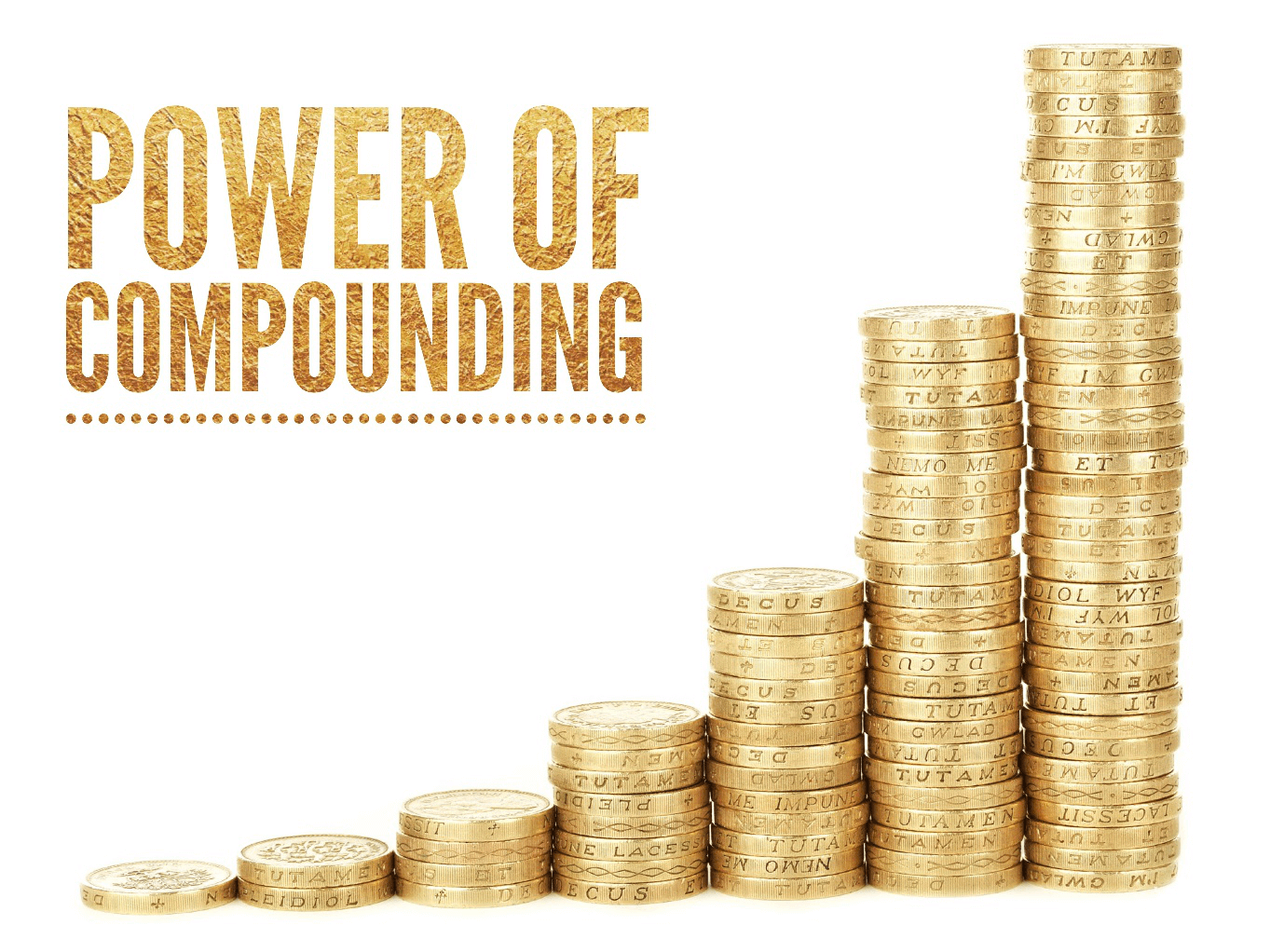
The first line “Compounding is the eighth wonder of this world” is poetic but the second line ” One who understands, reap the benefit and one who doesn’t pay heavily” is simply prophetic. When someone complimented Warren Buffet that he had started his investments at the age of 11, he famously replied “I was actually 11 years late”. No wonder he was rewarded for understanding the power of compounding so well and today everyone knows him and his continued standing among the top in Forbes list. Look at the other example- Many years back, when I had just started my career, someone requested me to buy a computer for him. I was working at Nehru Place which was the hub of the IT industry then. This person transferred the amount in my bank account and I was supposed to buy a computer for him. But what I did was use my credit card to buy a computer for him and utilised the money he transferred elsewhere. This was a disaster because I ended up having a liability which was like a mountain at that time. I was not able to pay for a long time and the compounding interest kept piling up and I eventually suffered almost double the amount. I paid the price of not paying attention to the cost of compounding. So, you have to decide whether you want to get the power of compounding or pay the price of not understanding it. Manoj Pandey CFP

Investor awareness is more about understanding self rather than what is happening outside.
The Supreme Court appointing a panel to investigate the alleged irregularities in Adani Companies is a welcome step. Presided by former supreme court judge Mr A M Sapre, the panel has highly respected people in the world of business, finance and law. The Hindenburg report caused havoc for more than a month in nearly all Adani owned companies. Now this expert committee will hopefully cover all alleged irregularities such as round tripping, stock price manipulation, regulatory failures and failure of disclosures on the part of Adani group apart from some other issues. Meanwhile SEBI will continue its ongoing investigation in this matter. The one area that this committee will suggest measures to improve is “investor awareness”. Now this is interesting because a normal investor generally follows the trend and starts investing or dumping shares based on prevailing trend. In the last four days, there is a big rally in Adani stocks and investors are taking notice of this up trend. Many will be considering investing in these stocks. So spreading investor awareness is a great challenge for anyone. This challenge is further amplified by the cooked up books. Even if certain sections of investors are quite aware and knowledgeable, they may not decipher what is truth vs fictitious. Every investigation results in something good for the people. We have seen a number of scams in the past and that resulted in making our regulatory system better. This committee will also help us make our system more robust. But investor awareness will always remain an issue as long as they focus more on external rather than internal factors. Watch out these factors- – Your financial goals – Your risk profile – Time horizon of your goals – Disciplined investments through systematic investments – Portfolio diversification – Right asset allocation These factors are far more important for your investment success than focusing on factors which sometimes even regulators could not pickup in time. Yes, investor awareness is the key but that awareness is more about understanding self rather watching and trying to catch the trend of the market. Manoj Pandey CFP

Is Your Advisor Following Some Basic Fundamentals While Doing Your Investment Planning?
10 Basic pointers which you as an investor should keep in mind- 1) Does your advisor tell you that asset allocation and proper diversification account for more than 90% of your investing success? Selection of funds and market timing only account for less than 10%? Should you devote more efforts to 90% or to 10%? 2) Does your advisor tell you that trying to catch the best fund may not work? Performance of the recent past is not the best indicator of future performance. 3) Does your advisor tell you to buy low-cost term insurance plans to cover your insurance requirement? Or does he/she insist on buying high cost ULIP and endowment plans? 4) Does your advisor tell you to stay invested or is he/she keep telling you to churn your portfolio in order to show that he/she is an active advisor? 5) Does your advisor understand your financial goals and risk profile before starting giving advice? 6) Is your advisor willing to track your financial discipline of monitoring your income and expenses and to accelerate your savings? 7) Your advisor may only talk about returns but is he/she equipped enough to understand the risk factors of investments? 8) Does your advisor tell you about the expense ratio of the recommended funds transparently? 9) Does your advisor tell you that frequent churning of the portfolio is the surest way of wealth destruction? 10) Does your advisor tell you to be cautious with funds who have delivered disproportionately high returns in the recent past? If your advisor doesn’t tell you these, don’t hesitate to ask. If he/she gives evasive reply, consider changing your advisor. It always pays to be suspectful with your every decision. Be it your financial decision or vote to choose the govt. Being suspectful is actually being alert. Your alertness will help you choose the right advisor and right portfolio. Manoj Pandey CFP

Chasing best mutual funds could be a trap
Many financial Journals, magazines and websites promote the concept of best funds of the year, star fund managers, best fund houses etc. They keep publishing the names of what they tout as the best funds to invest in. Furthermore, there are investment advisory companies and banks, who in the name of advisory, give buy recommendations of what they brag as the best funds and suggest dumping those funds which are not part of their so-called world-class research list. Their modus operandi is that they approach an existing investor with a sizable portfolio and give a scathing review of the portfolio. Then they recommend selling nearly all the existing funds and buying new funds. The trick is to sell the existing portfolio because sticking with that will not fetch them any commission. But reinvesting under their code will yield them good brokerage and a sizable portfolio instantly. What clients get in turn? Taxes, exit loads, disturbing a reasonably good portfolio and end up having funds which are likely to underperform in the near term. Yes, the chances of underperformance are quite high for funds who are the top performers in the recent past. Funds generally follow “reversion to the mean” concept meaning the chance of outperformance is quite slim for funds which have outperformed in the recent past. Many times, they recommend redeeming your existing funds and buying NFO (New Fund Offer). They exploit the misconception that it’s better to buy a fund whose NAV (net asset value) is Rs 10 compared to a fund whose NAV is say Rs 100. Fact is- In almost all cases, it’s better to buy a high NAV fund if the nature of both the funds is similar. That’s the pity of financial industry. Most of the segments are taking advantage of financial ignorance of the investors. Many investors who are otherwise doing very well in their respective careers, find investments in mutual funds and shares very complex and boring. They generally trust the bank and other big names. Unfortunately, the wealth advisory of most of the institutions is geared towards exploitation and manipulation. Yes, you need the services and advice of the advisor. But you have to find a way to judge whether your advisor has a high ethical standard or working under some hidden agenda in the guise of advisory. Manoj Pandey CFP

Is this what I so feared?
Most of the things in this world look scary or very difficult to handle at the outset. Many of us, especially those who started late, remember how onerous it was to learn driving. So much so, some people never even tried to learn driving. They convinced themselves that it’s too late for them to learn driving or why to even try which looks too difficult too risky. Similarly, most of the people are super frightened by the thought of poverty. What if I have to live in a small rented apartment, what if I have to wear cheap clothes, what if I and my family have to eat staples of the poor? These thoughts make people continuously anxious & pressured and many even compromises with their values because they can’t stand to face these thoughts let alone the reality. Look at the plight of our media. Here is the secret- More freedom can be gained by practicing poverty than chasing wealth. See, it is your freedom and not the amount of money which gives you lasting satisfaction and peace. You cannot get that most precious thing- freedom, by money, however big the figure is. Whether you are a lower middle-class struggler or high on the Forbes list, if the thought of poverty freezes you, then freedom will always elude you. Some of the practices which could prove to be miraculous- 1) Practice eating simplest possible food once in a week. Maybe just boiled vegetable and simple cheap rice. 2) Practice no spending day once in a week. 3) Take bath in cold water. With little will power, luxury of hot water can be avoided even in winters. 4) Have a set of inexpensive cloths and have the courage to wear them at will. 5) Spend some days during the year at humble localities even in your own city. When you are young and single, practicing this is relatively easier. With every practice, tell yourself- is this what I so feared? Also think of soldiers who rehearse the fight day in and day out and make themselves battle ready. Once you are poverty ready, lack of money thoughts will not terrify you. You will then move ahead towards your dream without fear without worry. Regular practice of poverty gets those dreadful thoughts out of the way and make way for liberation. And then your life will take the most wonderful turn. A path towards awakened freedom. Manoj Pandey CFP

Money is a Life Energy
Some years back, I was watching Salman Khan in an interview. In one question he shockingly replied, Main apne kamaye paise ko jalaun,, phad dun ,ya fenk dun, aapko kya problem hai! This is my tax paid money so I have every right to do whatever I want to do with my money, he added. Is this really your money? Do you have every right to treat this money however disdainfully you want? Out of the many definitions of money, the one which I find most appealing is “Money is life energy”. Energy is a universal concept and we ought to use it efficiently for ourselves, for future generations and for preserving our beautiful mother earth. We are already extracting too much from the mother earth without realising that we are depleting the earth’s resources. Already Earth overshoot day is 28th July meaning by this day, we exhaust the yearly resources from earth. Isn’t it alarming that for more than 5 months in a year we run on a resource deficit? And this deficit is only widening. Money that you earn is the symbol of earth’s resources or life energy. Every penny you earn or spend, you owe to mother earth’s flora & fauna and to collective humanity. Also, your money is not just earned by you alone. There are so many people, so much collective intelligence and so many resources involved in the process. So, you are actually the custodian of that money aka life energy. If you are fortunate enough to have some extra life energy, then is it right to treat it as if you are the ultimate holder of it? I think the conscious way is to treat it responsibly and the first step is to give it utmost respect. Money is just not a paper or numbers to show to others that you are a winner nor you are the ultimate owner of it. Money is life energy and you are a custodian of it. Salman Ji, think again consciously about your arguments that it’s my money, I can burn it, I can tear it, I can do whatever I want to do with it. Maybe you would realise that money is life energy and you ought to feel and deal like a custodian. That is what will return you back with lasting happiness, satisfaction and peace. Manoj Pandey CFP

5 Healthy Abundance Exercises
1) Meditate daily- Studies show that more than 80% of people who are successful with health, wealth and wisdom are doing some kind of meditation daily. 2) Pay yourself first- Develop the habit of investing some portion immediately after getting your monthly salary or any other payment. How much? Start with a small amount and gradually take it to around 35% of your monthly income. SIPs are most wonderful for exercising the “Pay Yourself First” habit. 3) Set Financial Goals- Goals not only make your investments well directed, they also help you choose right asset allocation which is the most important element in any investment planning. 4) Mutual Funds- Understand mutual funds. They are easy to understand yet most effective in achieving financial abundance for you. 5) Live in the Now- Don’t remain obsessed with the market, investment returns, long term goals etc. Develop the art of setting and striving for future goals without losing the joy of living in the Now. Manoj Pandey CFP

Will I be investing in Bitcoin?
Some mysteries are intriguing and challenging to understand. Bitcoin is one such concept which has been talked about a lot over the last 8-9 years and still the conundrum around it refuses to go away. My clients keep asking about this avenue but frankly even I didn’t know much about it (still work in progress), so my stock answer has been to refrain from anything which you can’t understand. But as youngsters are especially attracted to cryptocurrencies, it becomes inevitable for me to not only understand it but subsequently advise others whether to invest in it or not. After all, this is what one expects from his/her advisor. Bitcoins are easier if you are investing in it but understanding the functioning of how the blockchain works, how blocks are created and validated etc are very complex. But as a simple investment, it is as simple to transact as you do in shares and mutual funds. Whether to invest in Bitcoin or Not? Whatever I learnt so far about bitcoin, I will refrain from investing till I find more compelling reasons or belief to invest in it. Here are some of the issues with cryptocurrencies- 1) Since the very purpose of creating crypto currencies is to keep the regulators away from the system, regulating it seems utterly difficult. It is outside the purview of central banks and the governments and operates through the peer-to-peer connections and complex validation of every transaction. 2) Since there are no regulators to regulate this, there are always the possibilities of illegal or unethical transactions taking place. 3) Though the system is well encrypted (that’s why the term cryptocurrency), there may be some computing power which could result in hacking and online fraud. 4) As there is no centralised regulator, to whom can you approach if something goes wrong? 5) There is only a limited number of Bitcoins to be mined. A total of 21 million bitcoins to be mined altogether. The last bitcoin is expected to be mined by 2140 which is a long way off still it has implications as to how the mining or block validation will take place after that? 6) All the cryptocurrencies are competing with each other, what will be the future impact on each currency? 7) Mining (process of blockchain validation) takes very powerful computing power coupled with a huge amount of electricity. The annual electricity consumption in the bitcoin network of computers is more than twice that of Ireland. This is a heavy toll on the environment. Isn’t it? 8) Above all, the cryptocurrencies are very volatile. We have seen the jump of 80% and fall of 50% in a single day. Such volatility is not for my stomach. There are various pros of investing in Crypto but the risks at the moment outweigh the advantages. Moreover, I personally feel simple investments like mutual funds are perfectly suitable for my financial goals. So why experiment? Manoj Pandey CFP
Adani Saga continues with Forbes report
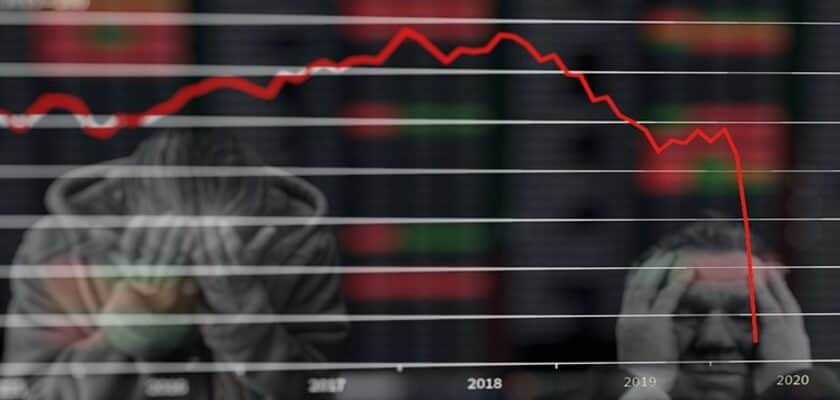
Internationally reputed financial magazine Forbes in its recent report has suspected round tripping by offshore funds owned by Vinod Adani to benefit Adani group companies. This report has given further credence to the Hindenburg report of wrongdoing by the Adani Group. Now it is up to the Indian agencies more particularly SEBI to investigate the whole matter to reveal the truth before the Indian investors as well as foreign investors who invest in India. It’s great that SEBI has reportedly begun its investigation. What are the implications for the investors- India with its continued growth story, great demographics and sound macro-economic factors will continue as the bright spot for the investors for many many years. Broader market has not been much impacted by the Adani saga largely because there is little retail participation in the Adani stocks. So, the market remained more or less immune to this whole controversy. Much will depend on how our regulators will act in a transparent manner to keep the confidence of the people in general and investors in particular intact. Manoj Pandey CFP

Money Meditation
Almost in every form of meditation, we observe in and out breath. When breathing is natural, why does the meditation process suggest watching the breath? Because, watching the breathing makes us more conscious. It is impossible to observe the breathing and at the same time think about the past and future. So, while meditating, you remain rooted in the “Now”. This is the very purpose of meditation i.e., to live in the now. Gradually, living in the now grows further in your life and you choose to live in the present even when you are not meditating. Or one can say, you are meditating all the time. But if we remain not so present, not so alert with our money flows, then we will not be able to attain our full consciousness potential. Many people who are into meditation, don’t treat money with the same consciousness as they do their breathing or watching the mind. It could then become a weak link to their spiritual journey. Therefore, why not start observing your income and expenses? Just like you watch breathe in and breathe out, observe all the money that flows into your life and all that flows out. This will not only help you manage your budget and maximise your savings, but even more importantly, it will be a wonderful exercise for your spiritual awakening as well. Manoj Pandey CFP